18 Best AI Visibility Tools for Marketing Agencies
Looking for the best AI visibility tools for agencies? We compare 18 platforms on multi-client management, prospect audits, reporting, and scalable pricing.
Agencies don't buy AI visibility tools the way a single brand does. A brand team tracks one company. An agency tracks many clients at once, pitches new prospects every month, reports results under its own name, and has to show clients what their AEO budget is actually buying.
That changes what matters in a tool. Coverage of AI engines is only the starting point. Agencies also need clean separation between clients, a way to diagnose prospects before a contract is signed, reports clients can read, pricing that still works at 10 or 20 clients, and evidence they can trace back to real AI answers. (For more on running GEO across a client portfolio, see Best GEO Tools for Marketing Agencies Managing Multiple Clients.)
We compared 18 tools on five things: client and prospect management, answer engine coverage, data quality, reporting and integrations, and agency partnership and support. Pricing and features below come from each vendor's own website as of November 2026. Where a vendor doesn't publish a figure, we say so, and any third-party figure is labeled as such.
Tool
Best for
Key strength
Main limitation
Agency features
Dageno
AI market intelligence and actionable GEO/AEO
Free market and brand lookup; Brand Graph; ghost citations
No backlink index or crawler
Partner Program; reseller and white-label options
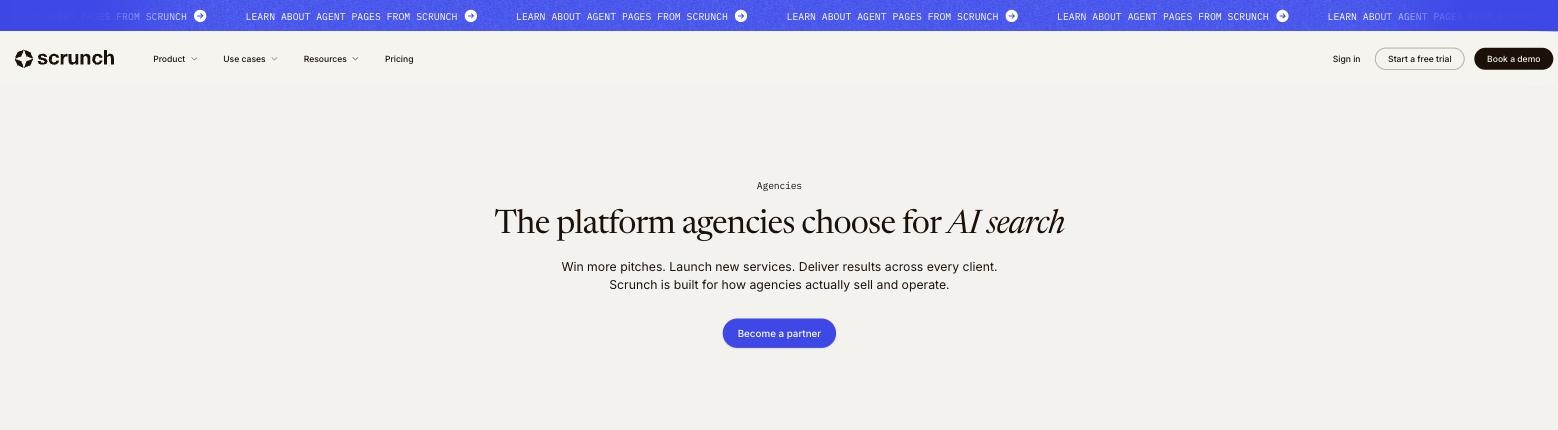
Scrunch
Agencies selling AI search as a service line
Agency program with pitch licenses and referral share
Starts at $300/mo
All clients in one workspace; guest access; Looker Studio
Low entry price, unlimited workspaces from Standard
Gemini, AI Mode and Claude cost extra
Workspace per client; branded Looker Studio reports
AthenaHQ
Agencies that want broad engine coverage
11 engines on Starter
Credit-metered; Starter is single-region
Agency Program; pitch workspaces
Rankability
Agencies that also produce SEO content
Branded reports and client approvals
Tracked queries capped per plan
Unlimited workspaces; read-only client links
Peec AI
Agencies that want per-client projects and pitch trials
Free 7-day pitch projects
Standard plans include 3 models
Agency credit plans; Looker Studio template
Semrush
Agencies already on Semrush
AI data inside a familiar SEO suite
Toolkit tracks 2 engines; white label is an add-on
Unlimited clients in Visibility Overview
Ahrefs
Research-heavy agencies
538M+ prompt database
No agency program or white label
Looker Studio connector, API, MCP
AirOps
Content-led agencies
Content agents that publish and refresh
No public pricing
Expert services only
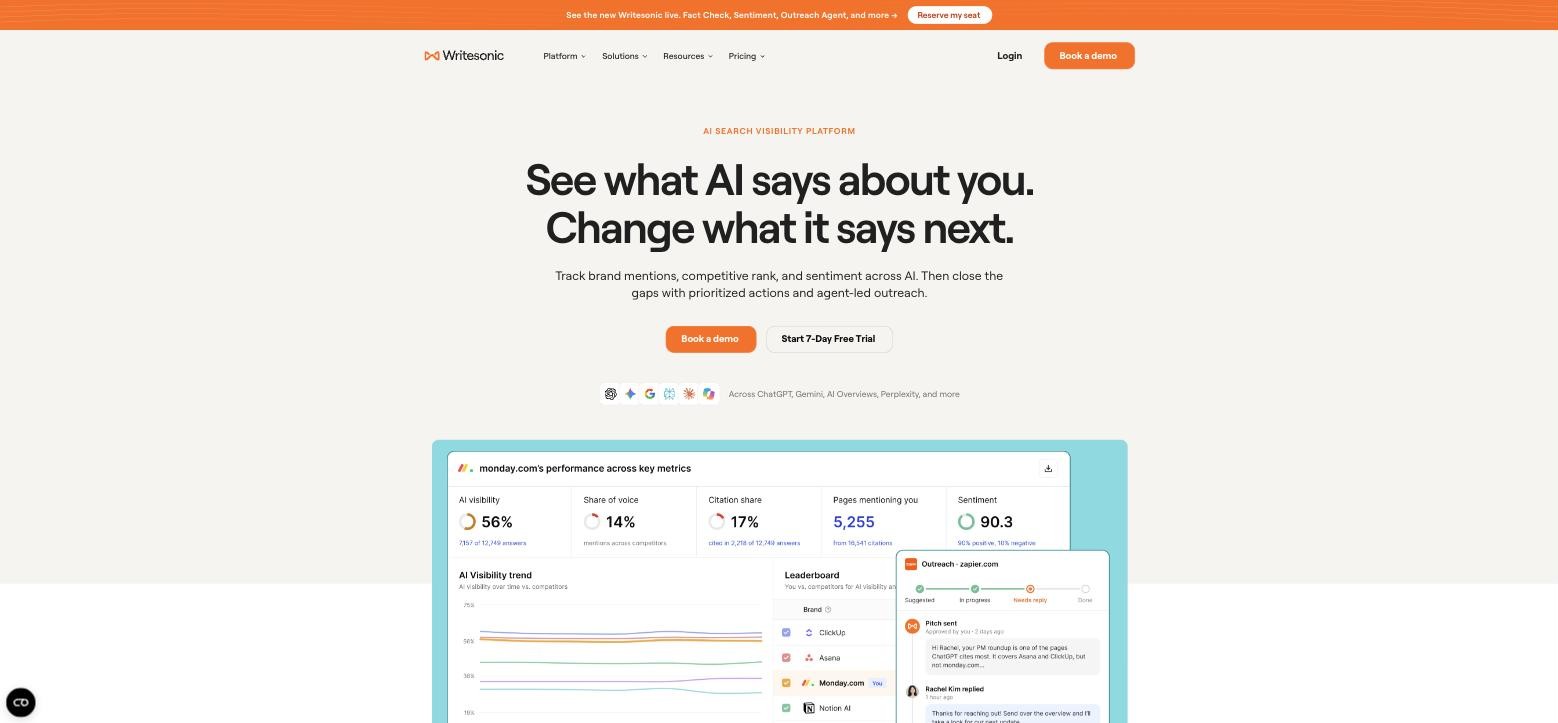
Writesonic
Agencies that want white label at mid-market prices
Reseller program with white label
Lower plans track 3 engines
Isolated client projects; portfolio dashboard
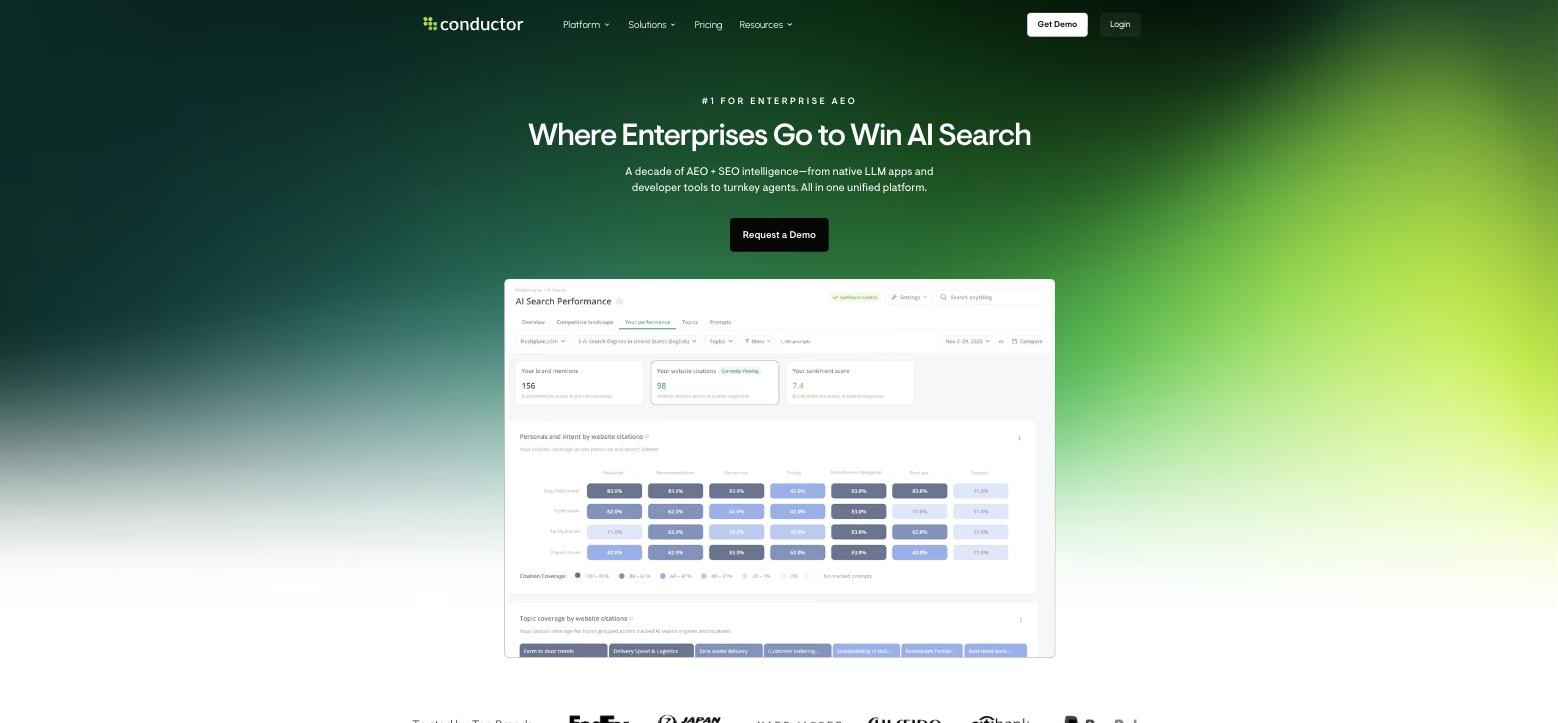
Conductor
Agencies serving enterprise clients
AEO tied to traffic and revenue
Enterprise pricing, not public
Partner Program
BrightEdge
Agencies with BrightEdge enterprise clients
AI Catalyst inside an established SEO platform
Pricing not public
BrightEdge Agency Solution
Bluefish
Fortune 500 brand work
Enterprise security and controls
Pricing not public; no agency program found
Services only
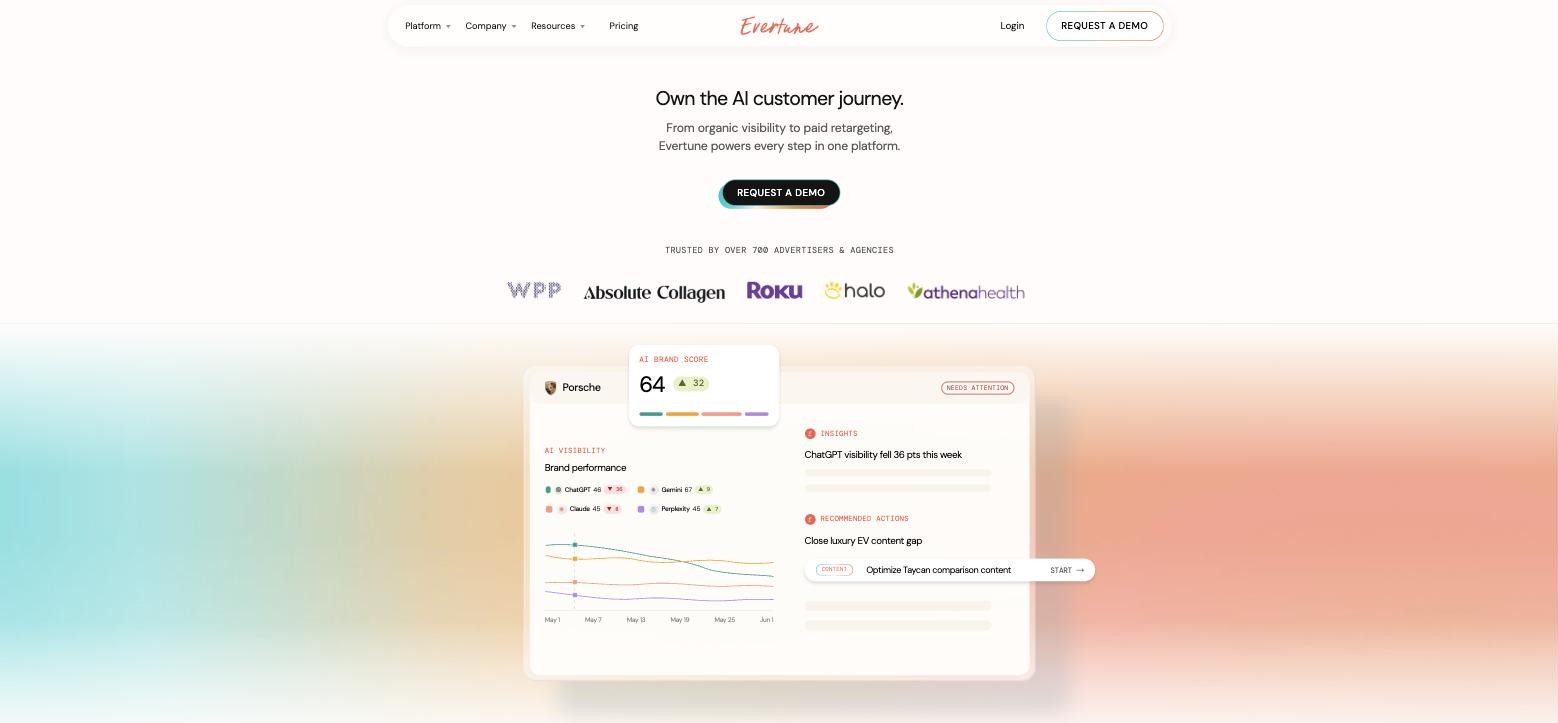
Evertune
Agencies with large-brand and ad budgets
Large prompt panel, heavy sampling
API on Enterprise only
No agency program found
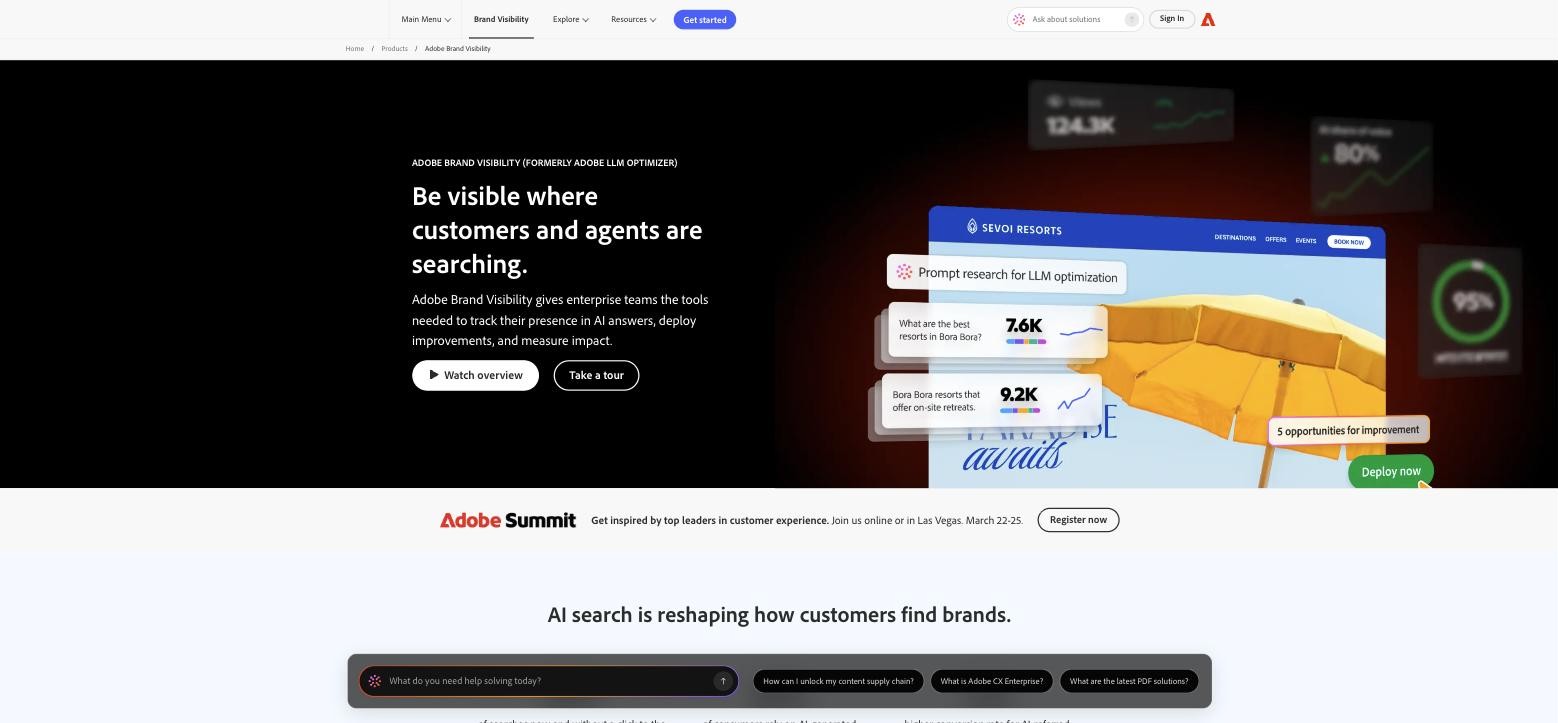
Adobe Brand Visibility
Agencies inside the Adobe stack
Fixes deployed at the CDN edge or in AEM
Pricing not public; Adobe-centric
No agency terms found
SE Visible
SE Ranking agencies
Agency plan with 30 projects
No white label yet
Unlimited seats; client view-only access
AIclicks
Small agencies starting out
Low entry price, prompt volumes
Starter: 1 site, 1 country, no API
Agency Partners Program
Brandlight
Agencies with global enterprise clients
Per-brand, per-market instances
Demo only, no self-serve
Partner program; co-pitch and co-sell
1. What to Look For in an AI Visibility Tool for Agencies
Client and prospect management
Each client needs its own brands, competitors, prompts and regions, with no data leaking between them. Check what a "project" or "workspace" means in each tool, because that decides how many clients a plan really covers. Also check whether you can diagnose a prospect before they sign: pitch workspaces, free audits or free market lookups save hours of manual research per proposal.
Answer engine coverage
Clients' buyers don't use one AI assistant. Look at which engines are included on the plan you'll actually buy, not on the top tier, and which ones cost extra. Several tools on this list charge separately for Gemini, Google AI Mode or Claude, or include only three engines below Enterprise.
Data quality
AI answers change between runs, models and regions, so one answer is a sample, not a ranking. Ask how often prompts are run, whether you can open the original answer and the cited pages behind each metric, and where the data comes from. If a number can't be traced to real answers, you can't defend it in a client meeting.
Reporting and integrations
Share links, PDF exports, scheduled reports, Looker Studio connectors, APIs and full white-label portals are different features, often on different plans. Decide which ones your clients need before you compare prices.
Agency partnership and support
A real agency program goes beyond a discount: pitch licenses, co-marketing, referral or resale terms, and a named contact. Several tools on this list have no agency program at all; that's fine if you only need the software, but it matters if you plan to resell.
2. The 18 Best AI Visibility Tools for Marketing Agencies
1. Dageno
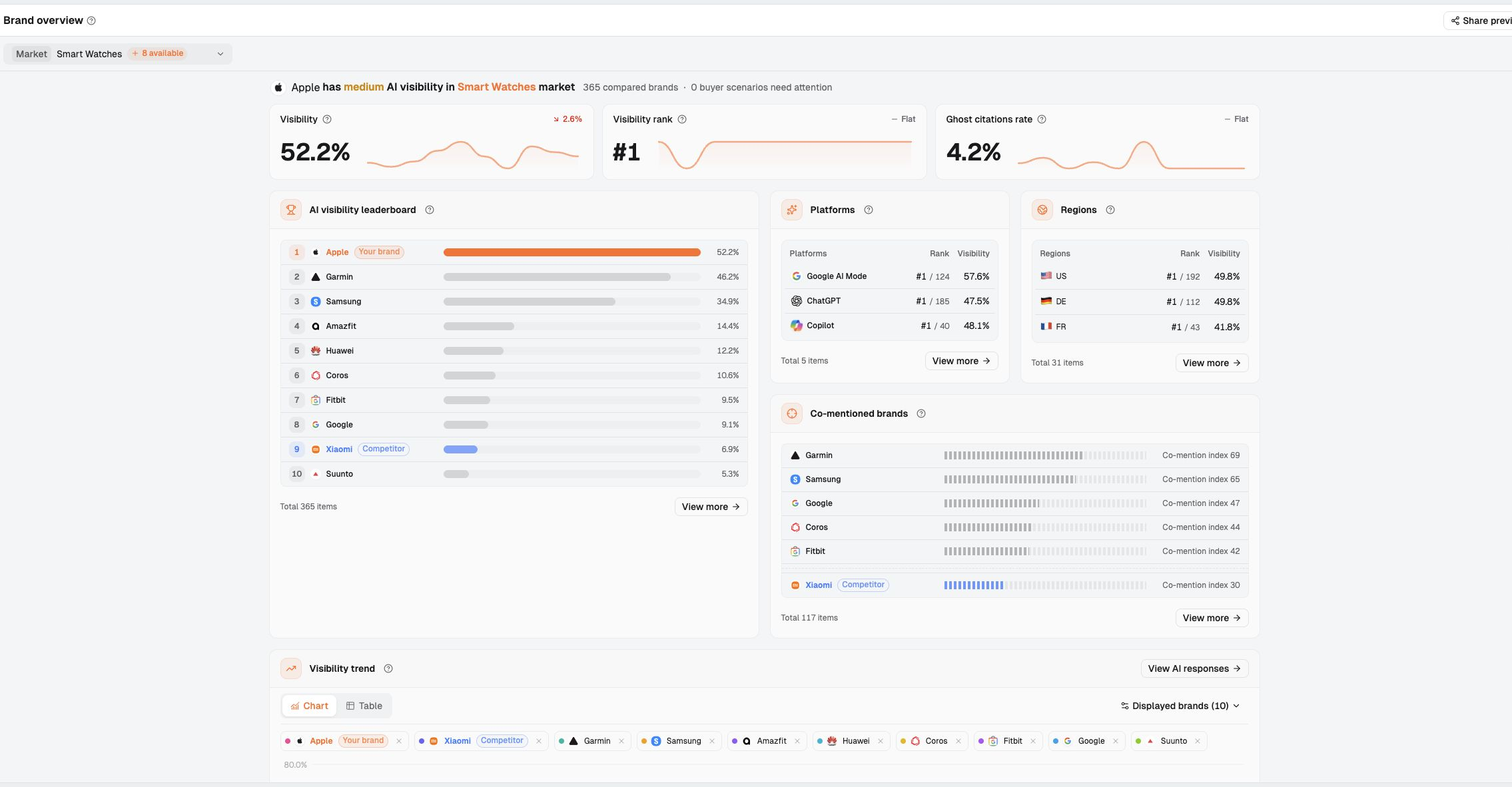
Dageno brand overview: Apple in the smart watch market.
Best for: AI market intelligence, brand relationship analysis, and actionable GEO/AEO optimization.
What it does
Dageno is a GEO/AEO platform for brand, SEO, growth and content teams. It shows how a brand and its competitors perform in AI search, finds the relationships and citations behind AI recommendations, and helps teams decide which visibility problems to fix first.
Dageno's free Brand Graph is where this starts. Instead of only counting brand mentions, it connects companies, brands, products, organizations, user intents, selling points, citation sources, AI platforms, regions and time. That helps a team see why AI recommends a competitor, where that recommendation comes from, and which relationships or information gaps are holding their own brand back.
This analysis is built on market data covering about 12,000 market segments, more than 100 million product records and 500 million ad records. Through the Market Intelligence module, teams can study a segment's competitive landscape, brand positioning, user needs and competitor performance, without relying only on keywords or prompts they set up themselves.
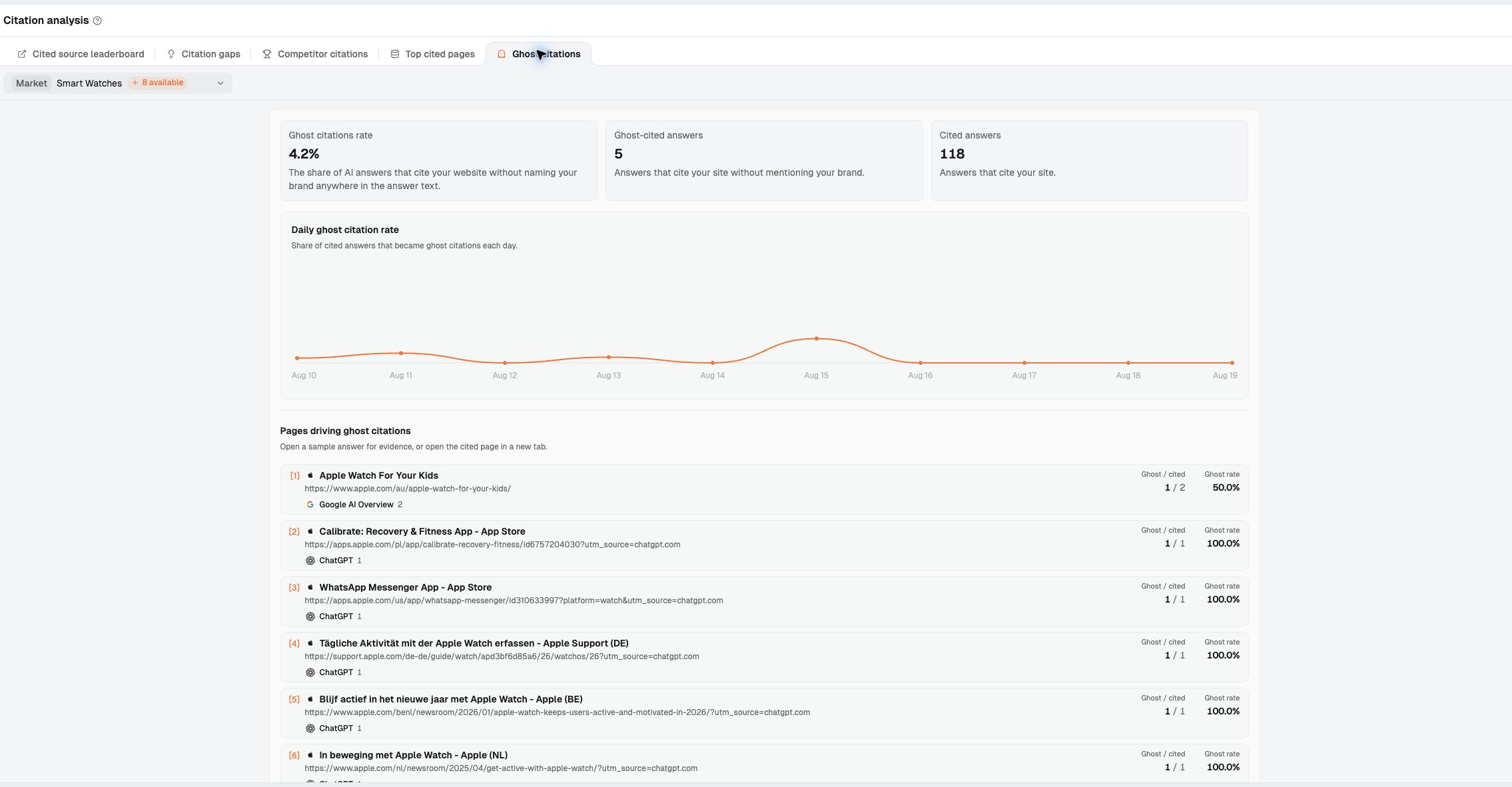
For ongoing monitoring, Dageno supports custom Topic and Prompt Tracking, so teams can follow brand and competitor mentions, positions, answer content and citations across AI platforms and regions. Prompt Volumes show how much demand sits behind the questions being tracked. Citation Analysis separates "a page was cited by AI" from "the brand was mentioned in the answer" and flags ghost citations: cases where a brand's page is already a source for the answer, but the brand name never appears in it.
Ghost citations: pages AI uses as a source without naming the brand.
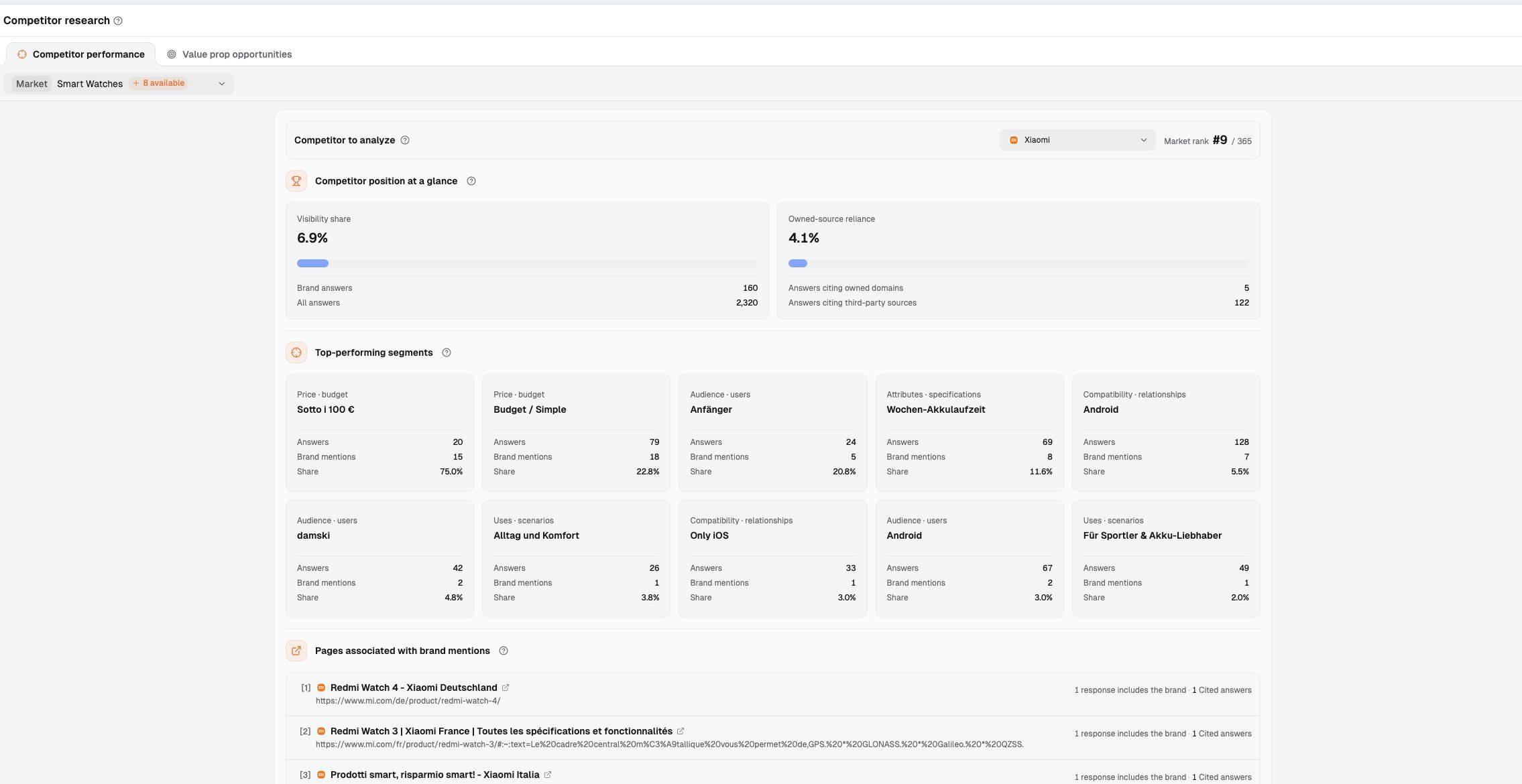
Competitor Research and Issues & Opportunities show where to act. Visibility problems are grouped by user intent, including Recommendations & Options, Alternatives, Compare Options and Choosing Criteria, and combined with brand visibility, ghost citation rate and citation counts. Agents then turn these findings into identified issues, opportunities and next actions, so teams can see which buying situations deserve attention first.
Competitor research: Xiaomi, viewed from Apple's workspace.
Every conclusion can be traced back to the original AI answer and the pages it cited. The data comes from continuous observation of publicly returned results on about 10 AI platforms, not from private user chat logs. Marketers can check the evidence themselves: how AI describes the brand, which sources it relies on, and how competitors earn their recommendations.
What you'll like
Data first, pricing second. Public market queries are free, permanently. An agency can look at a prospect's market and competitors before anyone signs anything, and a client can see the market before deciding to buy.
No gating by model or region. From Starter up, every paid plan can use the 10 standard AI models and 86 countries and regions. Plans start at $49/mo (Starter, 1 project, 50 prompts), $199/mo (Growth, 2 projects, 250 prompts) and $410/mo (Scale, 5 projects, 600 prompts), with Custom plans above that. The comparison that matters is the real budget to do the same job, not the lowest entry price.
Answers "why," not just "whether." Brand Graph, competitor research and ghost citations explain why AI recommends a competitor and what to fix, which is what clients actually pay an agency for.
A partner program. The Partner Program covers reseller, white-label and joint-delivery models, with presales and delivery support.
Where it falls short
Dageno has no backlink index or site crawler, so link building and technical audits still need a traditional SEO tool.
One project covers one company and all its brands. Agencies with more than five client companies will need a Custom plan, and white label is arranged case by case.
Best for: Agencies building AI search into a formal service line.
What it does
Scrunch monitors brand visibility across ChatGPT, Claude, Gemini, Perplexity, Google AI Mode, AI Overviews and Meta, maps citations and sources, and adds an Agent Experience Platform (AXP) that serves a machine-readable version of a site to AI agents. Starter is $300/mo ($250 billed annually) with 350 custom prompts; Growth is $500/mo with 700.
What you'll like
Its Agency Partner Program is one of the most complete here: all client brands in one workspace, guest access per brand, Looker Studio sharing, prospecting licenses, a co-marketing fund and up to 20% referral commission.
Where it falls short
The entry price is high for small agencies, and the pricing page lists the Data API as Enterprise-only, while the agency page says agencies get API access, so confirm before you commit.
Best for: Agencies that want affordable monitoring across many small clients.
What it does
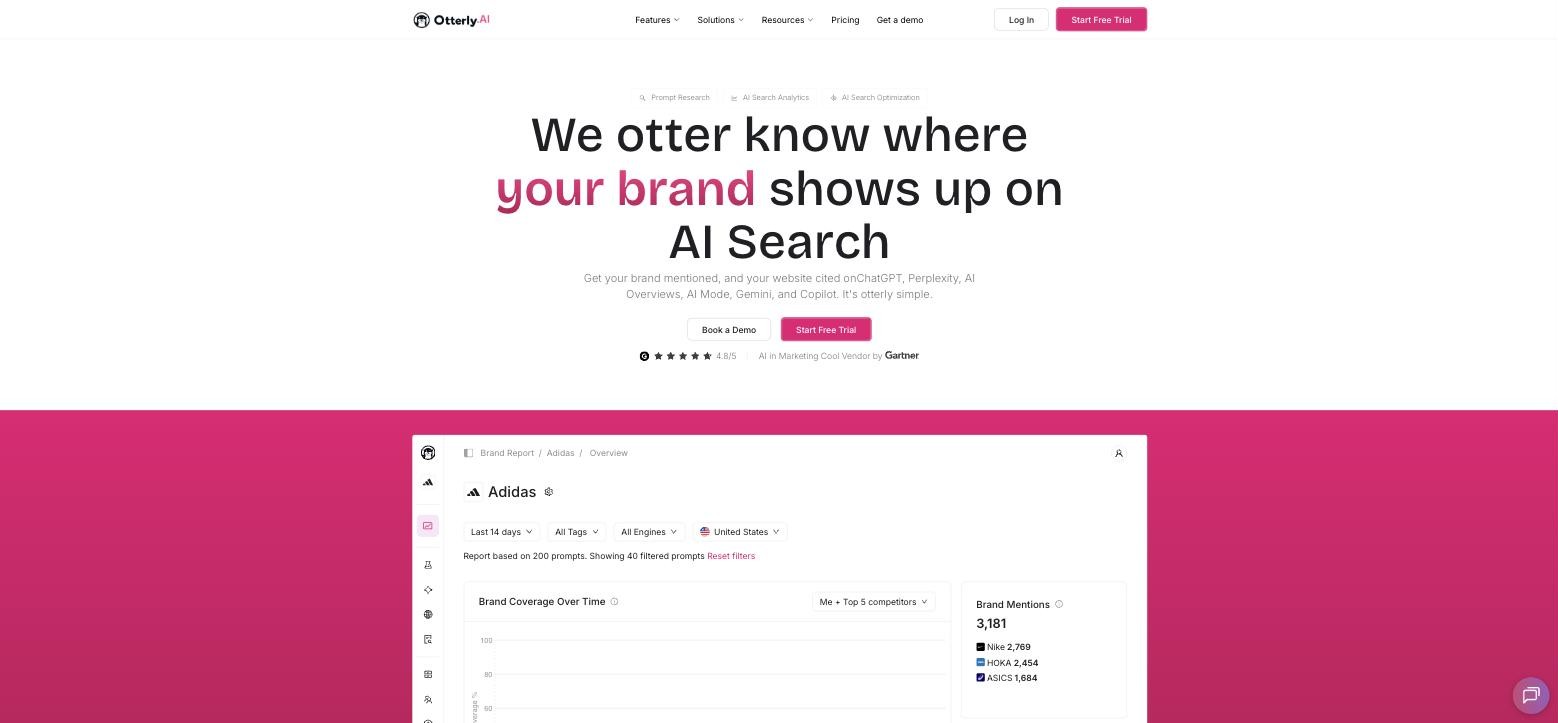
Otterly tracks brand mentions and citations in ChatGPT, Google AI Overviews, Perplexity and Microsoft Copilot, with prompt research, a GEO content audit, weekly reports, an API and MCP. Plans run from Lite ($29/mo, 15 prompts) to Standard ($189/mo, 100 prompts) and Premium ($489/mo, 400 prompts).
What you'll like
Standard and above include unlimited workspaces, and the Agency Partner Program adds a separate workspace per client, pitch workspaces, branded Looker Studio reports and one invoice.
Where it falls short
Google AI Mode, Gemini and Claude are paid add-ons, and Claude is expensive ($109/mo on Standard). The pricing page also shows two different price sets, so confirm the current one.
Best for: Agencies that need broad engine coverage from the first paid plan.
What it does
AthenaHQ's Starter plan ($295/mo, 3,600 credits; one credit equals one AI response) covers 11 engines, including ChatGPT, Gemini, Claude, Copilot, Grok, DeepSeek, Meta AI and Mistral, with unlimited prompts and seats. It adds citation tracking, a content optimization agent and GA4 and Search Console integrations.
What you'll like
The Agency Program offers multi-brand management with team permissions, pitch-ready workspaces, discounted licenses and a dedicated Agency Growth Manager.
Where it falls short
Usage is metered by credits. Starter is single-region, and multi-region tracking, Looker and BI exports and prompt volume forecasting are Enterprise only.
Best for: Agencies that pair AI visibility with SEO content production.
What it does
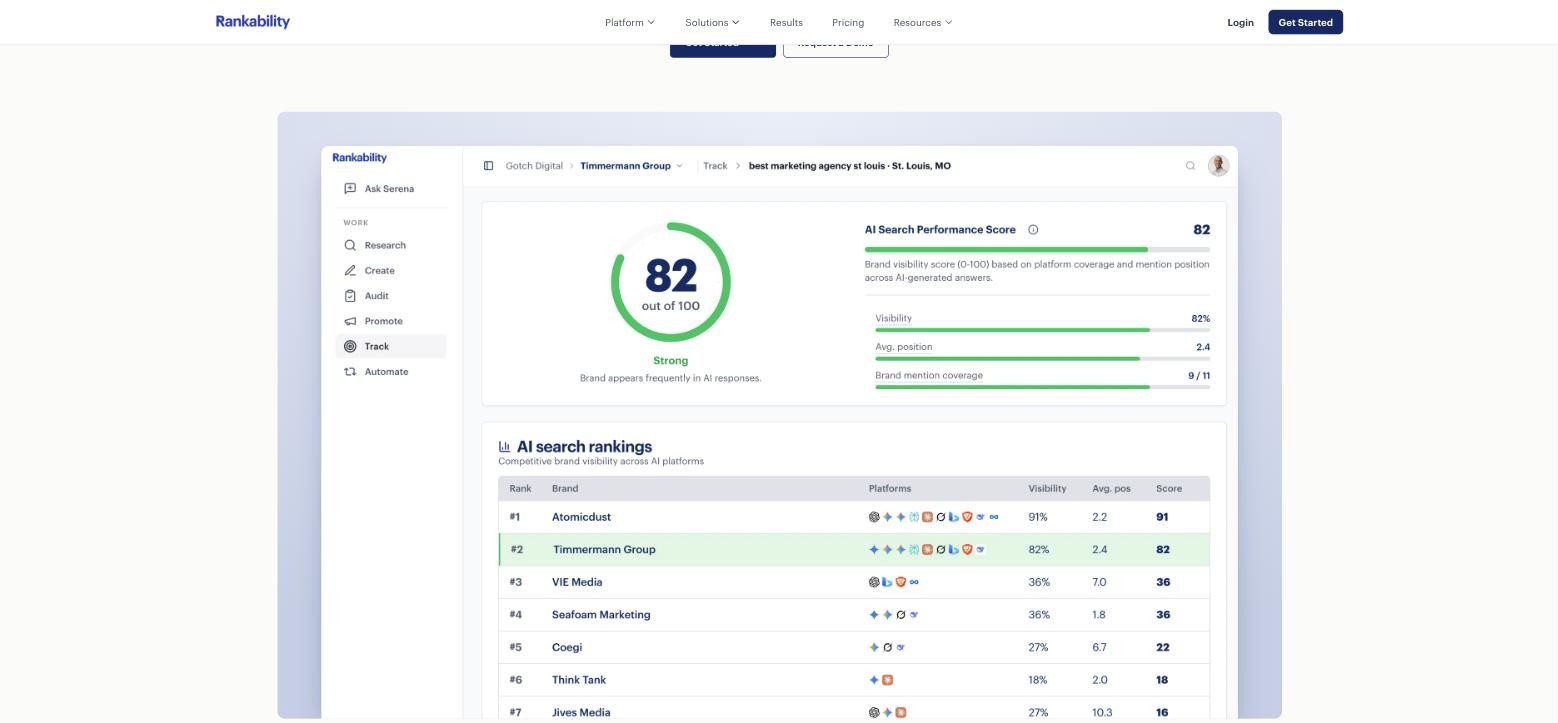
Rankability's Track product monitors 11 engines on every paid tier, including ChatGPT, Claude, Perplexity, Gemini, Grok, Copilot and Brave, alongside modules for content research, writing, optimization and audits. Plans start at $97/mo for 100 tracked AI queries, up to $497/mo for 500.
What you'll like
Unlimited workspaces and team members, branded reports with your logo and colors, read-only client links with no login, and client keyword approvals.
Where it falls short
Tracked AI queries are capped per plan, and there is no dedicated agency tier or full white-label portal.
Best for: Agencies that want isolated client projects and free pitch trials.
What it does
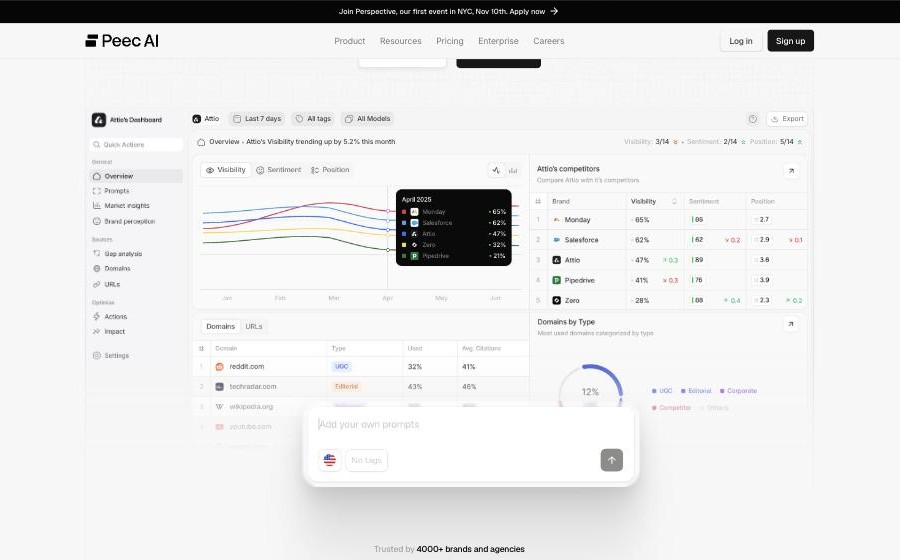
Peec AI tracks visibility, position and sentiment, separates sources AI used from sources it cited, and suggests prompts with search volumes. Brand plans run from $95/mo (50 prompts, 1 project) to $495/mo (350 prompts, 5 projects).
What you'll like
Agency plans are credit-based (one credit is one prompt on one model for one day), each client is an isolated project, and free 7-day pitch projects make it easy to show prospects real data. Seats are unlimited.
Where it falls short
Standard plans include three models; broader coverage is Enterprise. Peec doesn't publish agency prices (one third-party review lists $245–$795/mo), and Looker Studio starts at Advanced.
Best for: Agencies already running client SEO in Semrush.
What it does
The AI Visibility Toolkit ($99/mo) adds brand performance, prompt tracking and prompt research with topic volume and intent to Semrush. Semrush One bundles SEO and AI search ($199/mo and $299/mo), and Enterprise AIO covers 11 AI platforms with white-label reporting.
What you'll like
AI data sits next to keyword, backlink and site audit data clients already see, and Visibility Overview covers unlimited clients.
Where it falls short
In the toolkit, prompt tracking covers only ChatGPT and Google AI Mode, pricing is per domain, each extra user needs their own license, and white-label PDFs need a paid reports add-on.
Best for: Research-heavy agencies that want large-scale prompt and mention data.
What it does
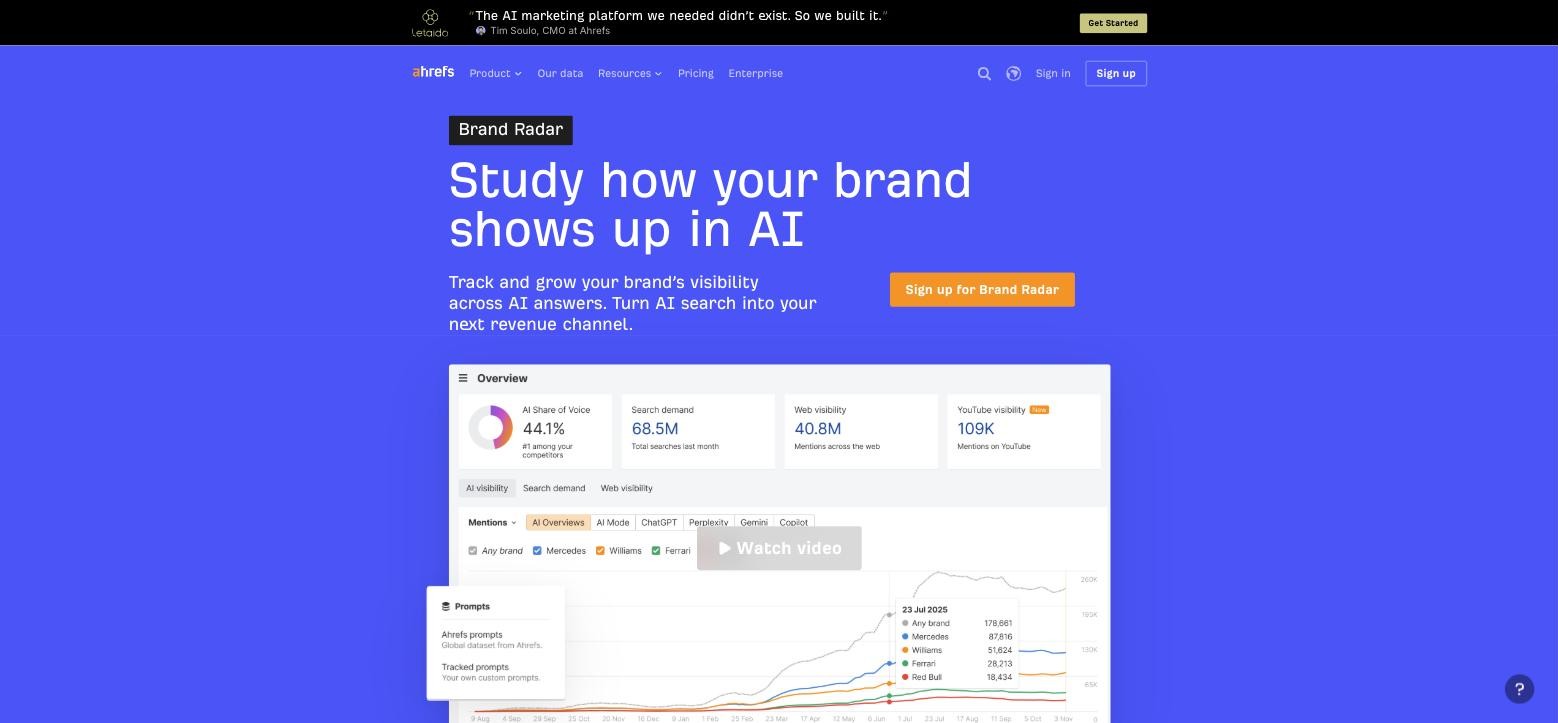
Brand Radar tracks mentions, citations and sentiment across AI Overviews, AI Mode, ChatGPT, Perplexity, Gemini and Copilot, backed by a database of 538M+ prompts. Ahrefs plans include a small number of custom prompt checks (150 to 600), with prompt packs from $50/mo.
What you'll like
There's no cap on the brands or domains you can analyze, which suits competitive research, and the Looker Studio connector, API and MCP make reporting easy to automate.
Where it falls short
There's no agency program, white label or multi-client workspace. Ahrefs' own pages also disagree on Brand Radar pricing ($199/mo per platform index or for all platforms), so confirm the price for the engines you need.
Best for: Content-led agencies that want to act on visibility data, not just report it.
What it does
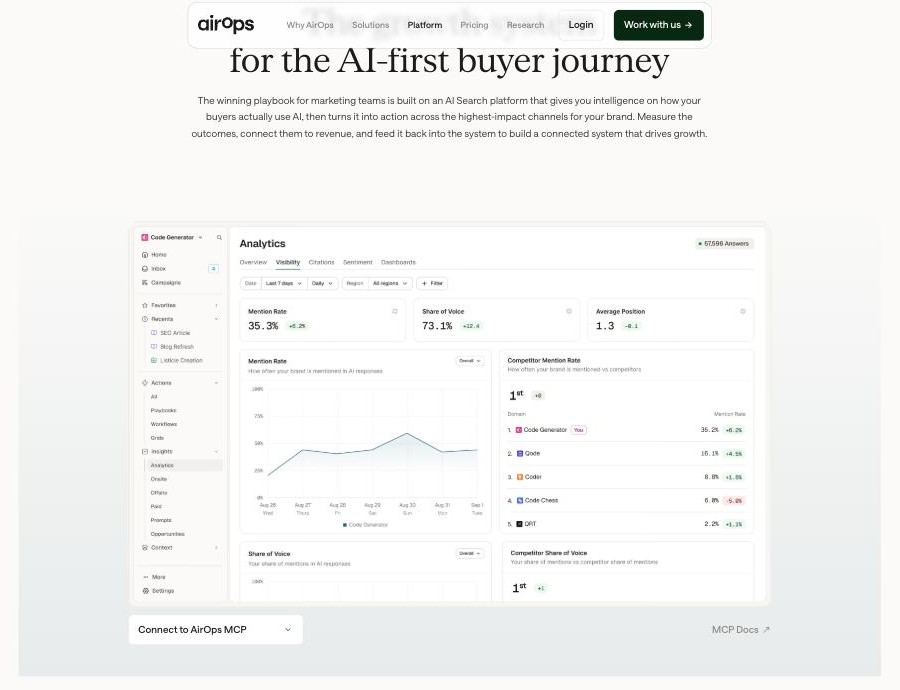
AirOps combines AI visibility tracking (mention rate, share of voice, citations, sentiment) with content agents that research, create, publish and refresh pages through CMS integrations. It draws on a 70M-prompt dataset with volume weighting.
What you'll like
It closes the gap between "we found a problem" and "we published the fix" in one workflow.
Where it falls short
There's no public pricing (plans are priced by task volume), the Solo plan tracks ChatGPT only, and no agency program or white label was found.
Best for: Agencies that want white-label reporting without enterprise pricing.
What it does
Writesonic tracks AI visibility, citations and prompt volume, and its Action Center suggests fixes. Annual plans run from $79/mo (50 prompts, 1 project) to $399/mo (200 prompts, 2 projects).
What you'll like
The agency offer is unusually complete: an isolated project per client, a portfolio dashboard, white-label reports on your own domain, consolidated billing, and a partner program with bulk purchase, reseller (white label) and 20% affiliate options.
Where it falls short
Below Enterprise, only ChatGPT, Gemini and AI Overviews are tracked, and Prompt Explorer and AI search volume are Enterprise only.
Best for: Agencies serving enterprise clients that already use Conductor.
What it does
Conductor positions itself as an enterprise AEO platform, tracking mentions and citations across major AI engines and tying them to traffic and revenue, with AI bot crawl monitoring, content and technical agents, a data API and MCP.
What you'll like
It connects AEO with established enterprise SEO data, and its Partner Program supports co-selling and co-marketing.
Where it falls short
Pricing is usage-based and not public (one third-party marketplace reports a median around $49,000/year), and the free Essentials tier includes no AI search credits.
Best for: Agencies whose enterprise clients already run BrightEdge.
What it does
AI Catalyst is BrightEdge's AI search layer: mentions versus citations, sentiment and persona testing, prompts mapped to the buyer journey, competitor alerts and citation-gap content briefs.
What you'll like
The BrightEdge Agency Solution includes certification, a flexible rate card, training and co-marketing.
Where it falls short
Pricing and per-tier limits aren't published, and white label, API and Looker Studio support weren't found on its pages.
Best for: Agencies working on Fortune 500 brand accounts.
What it does
Bluefish calls itself an agentic marketing platform for the Fortune 500, tracking more than 10 LLMs daily (including Alexa for Shopping), with monitoring, optimization and measurement suites, an API, MCP, SOC 2 Type II and SSO.
What you'll like
Enterprise security and controls such as static prompts and model-drift settings suit large regulated brands.
Where it falls short
Pricing isn't public, and no agency program or white label was found.
Best for: Agencies with large brand clients that also want AI ad campaigns.
What it does
Evertune samples each prompt up to 100 times per model, draws on a 150M+ prompt panel, and adds content tools and an Ads Agent for ChatGPT ad campaigns. Starter is $60/mo (5 models); Pro is $800/mo billed annually (11 models).
What you'll like
Heavy sampling gives more stable visibility numbers than single runs.
Where it falls short
Starter has no content or prompt research tools, the API is Enterprise only, and no formal agency program was found.
Best for: Agencies serving clients on Adobe Experience Cloud.
What it does
Adobe Brand Visibility tracks mentions, citations, sentiment and share of voice across ten LLM families and 25+ languages, benchmarks up to five competitors, and can deploy fixes at the CDN edge or in AEM Sites. The license includes Semrush Enterprise AIO.
What you'll like
For Adobe clients, it connects AI visibility to Adobe Analytics and content workflows they already use.
Where it falls short
Pricing isn't public (licensed by prompts per year; third-party estimates conflict), and no agency or multi-client terms were found.
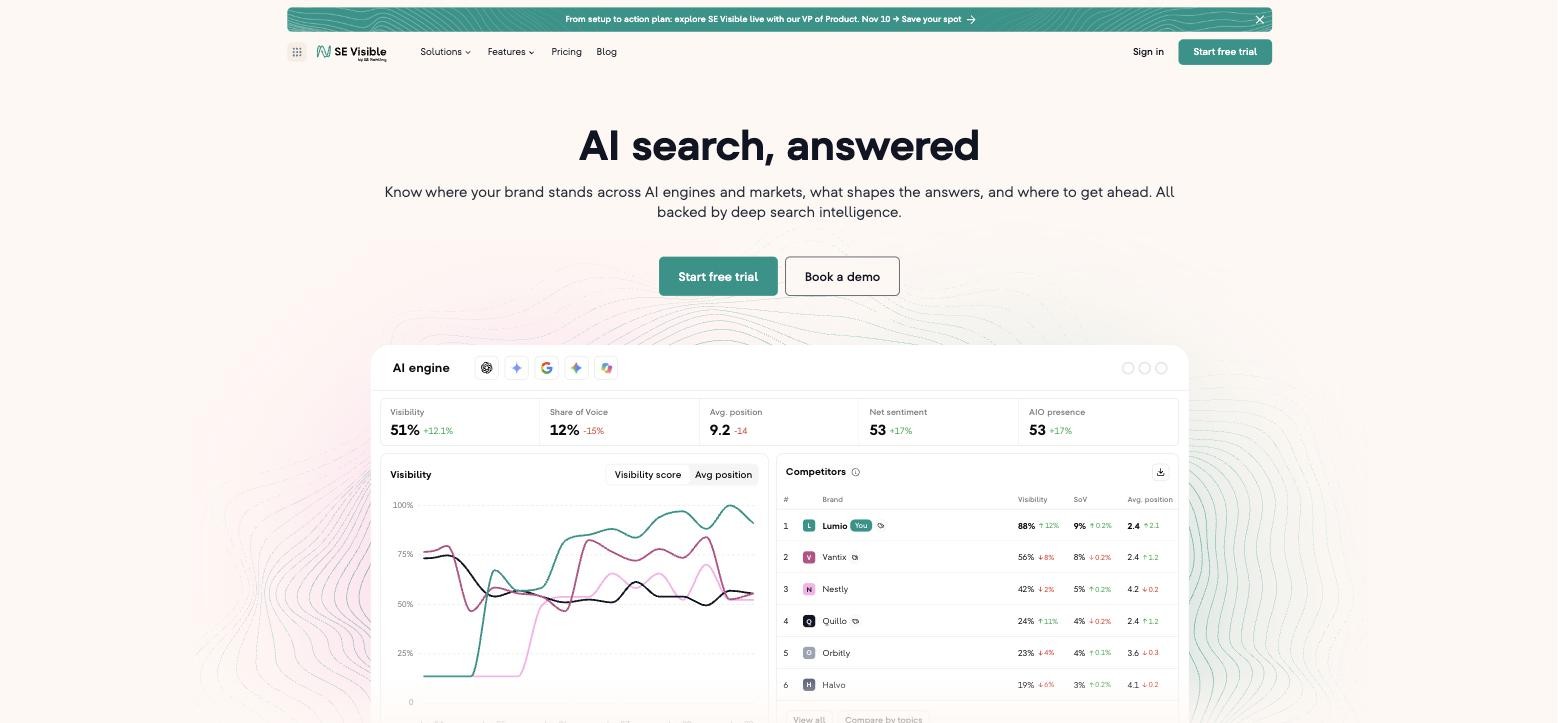
SE Visible, from SE Ranking, tracks AI visibility, sentiment and citations by domain and URL, with an API, MCP and a Data Studio connector on every plan. Plans run from Basic ($89/mo, 75 prompts, 5 projects) to Agency ($399/mo, 1,000 prompts, 30 projects).
What you'll like
Unlimited seats, view-only client access and a dedicated Agency plan.
Where it falls short
White label isn't available yet (SE Ranking's Agency Pack covers only its SEO platform), each extra location counts as a separate prompt, and its engine list differs between pages.
Best for: Small agencies starting an AI visibility service.
What it does
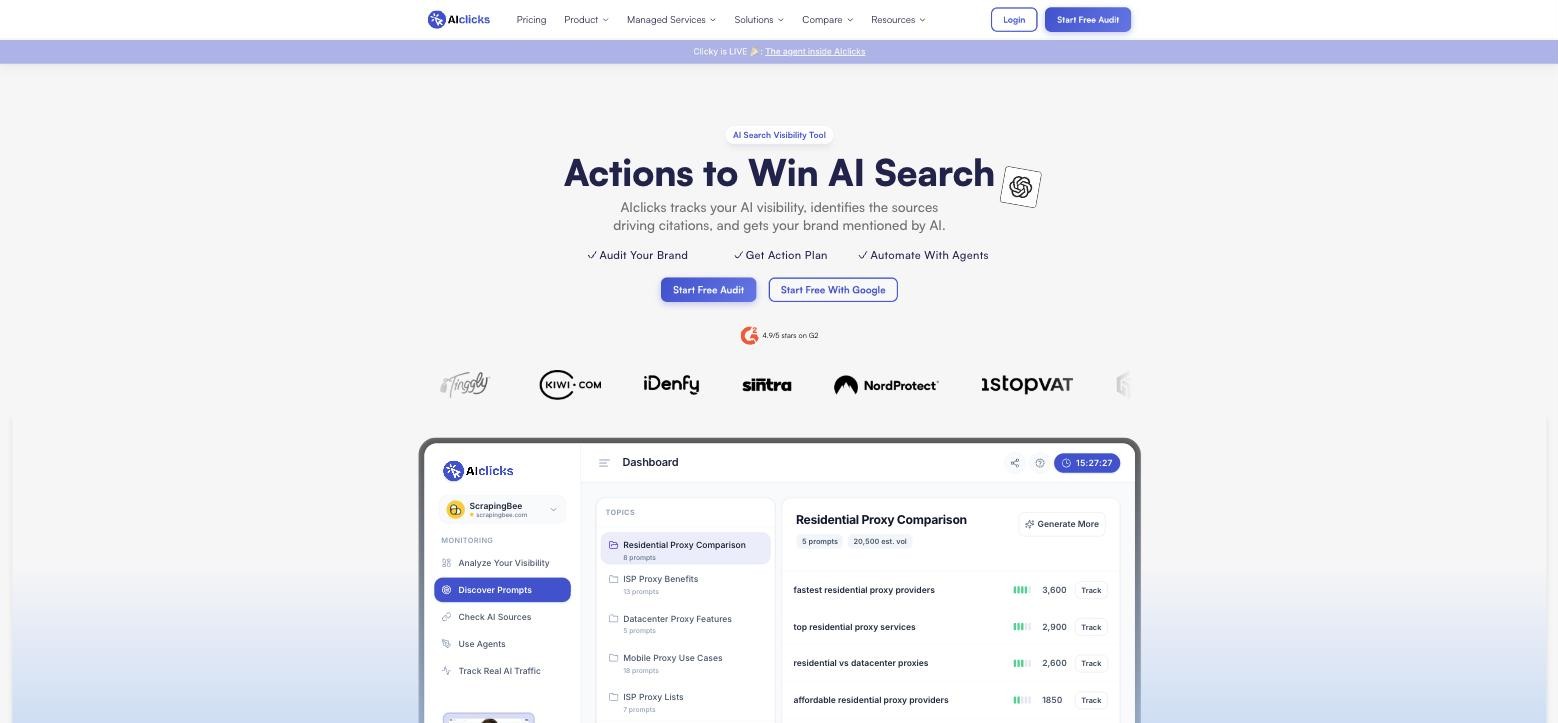
AIclicks tracks up to 10 engines depending on plan, estimates prompt search volumes, analyzes sources, and generates recommendations and AI-optimized articles. Plans run from $59/mo (30 prompts, 3 engines) to $499/mo (300 prompts, 6 engines).
What you'll like
Its Agency Partners Program includes a directory listing, free client audits, revenue share, lead matching and a dedicated strategist.
Where it falls short
Starter covers one site and one country with no API, and no white label was found.
Best for: Agencies managing global enterprise brands across markets and languages.
What it does
Brandlight covers 12 engines, including Qwen, Mistral and Naver, runs a separate instance per brand, market and language with an HQ roll-up, and scores citation impact.
What you'll like
Its partner program offers a dedicated AI strategist, co-pitching and co-selling, under a "you execute, you bill" model.
Where it falls short
It's sold by demo only, with no public pricing or self-serve option.
3. Build Your Agency's AEO Practice on Dageno
Monitoring tells a client where they stand. An AEO practice tells them why, what to change, and whether it worked. Dageno is built to support that whole cycle:
Win the pitch. Use free public market queries and the Brand Graph to show a prospect how AI sees them and their competitors before they sign.
Find what to fix. Prompt Volumes show which questions carry real demand. Agents surface issues, opportunities and next actions by intent, and ghost citations show where a client's content is already used but not credited.
Prove the work. Every metric traces back to the original AI answers and cited pages, so you can show clients the evidence behind each change.
Scale without paywalls. Every team can see the market before deciding to buy. Paid plans don't gate models or regions: from Starter, you can choose the 10 standard models and 86 countries and regions. Compare the real budget to deliver the same work, not the lowest entry price.
4. AI Visibility Tools for Marketing Agencies: FAQs
What does an AI visibility tool do for an agency?
It runs prompts across AI assistants and records whether each client is mentioned, recommended or cited, which competitors appear, and which sources the answers rely on. For an agency, the value is turning that into client diagnoses, priorities and reports, across many clients at once.
Which of these tools have real agency programs?
Based on their own websites, Dageno, Scrunch, Otterly.AI, AthenaHQ, Writesonic, Conductor, BrightEdge, AIclicks and Brandlight have named agency or partner programs. Peec AI offers agency plans, and Rankability and SE Visible offer agency-friendly features without a formal program. We found no agency program for Ahrefs, AirOps, Bluefish, Evertune or Adobe.
Can these tools help win new clients, not just serve existing ones?
Yes, if they let you look at a prospect before a contract. Dageno's public market queries are free, Peec AI offers free pitch projects, Otterly and AthenaHQ offer pitch workspaces, and Scrunch includes prospecting licenses in its agency program.
How do agencies prove AEO ROI to clients?
Start with evidence: the original AI answers and cited pages behind each metric, before and after a change. Then track AI referral traffic and conversions alongside it. Be careful with cause and effect: more mentions don't automatically mean more revenue, and AI referral traffic is often hard to attribute.
Does an agency need a dedicated AEO tool, or is an SEO platform enough?
SEO suites like Semrush and Ahrefs now include AI tracking, which may be enough for light monitoring. A dedicated tool matters when AEO is a service you sell: you'll need more engines, more prompts per client, citation analysis and client-ready reporting than most SEO add-ons provide.
How many answer engines should an agency track?
At minimum, ChatGPT, Google AI Overviews, Google AI Mode, Gemini and Perplexity, then Claude, Copilot and others depending on each client's market. Check what's included on the plan you'll buy, and whether extra engines or regions multiply cost.
About the Author
Updated by
Dageno
Dageno is the research and insights team at Dageno AI, publishing industry reports and expert analysis on AI Search Visibility, Generative Engine Optimization (GEO), and AI-powered search discovery.
 Alexa (Custom plan)